
Community Architecture as Connective Thread
In the heart of Bavegem, a new story has taken shape — not from a blank slate, but from the accumulated layers of what was already there. A parish hall, a school building, an old rectory, an overgrown garden: each element carried its own memory. Our task was to let these fragments breathe together as one coherent whole. Architecture as a binding agent, not a statement.
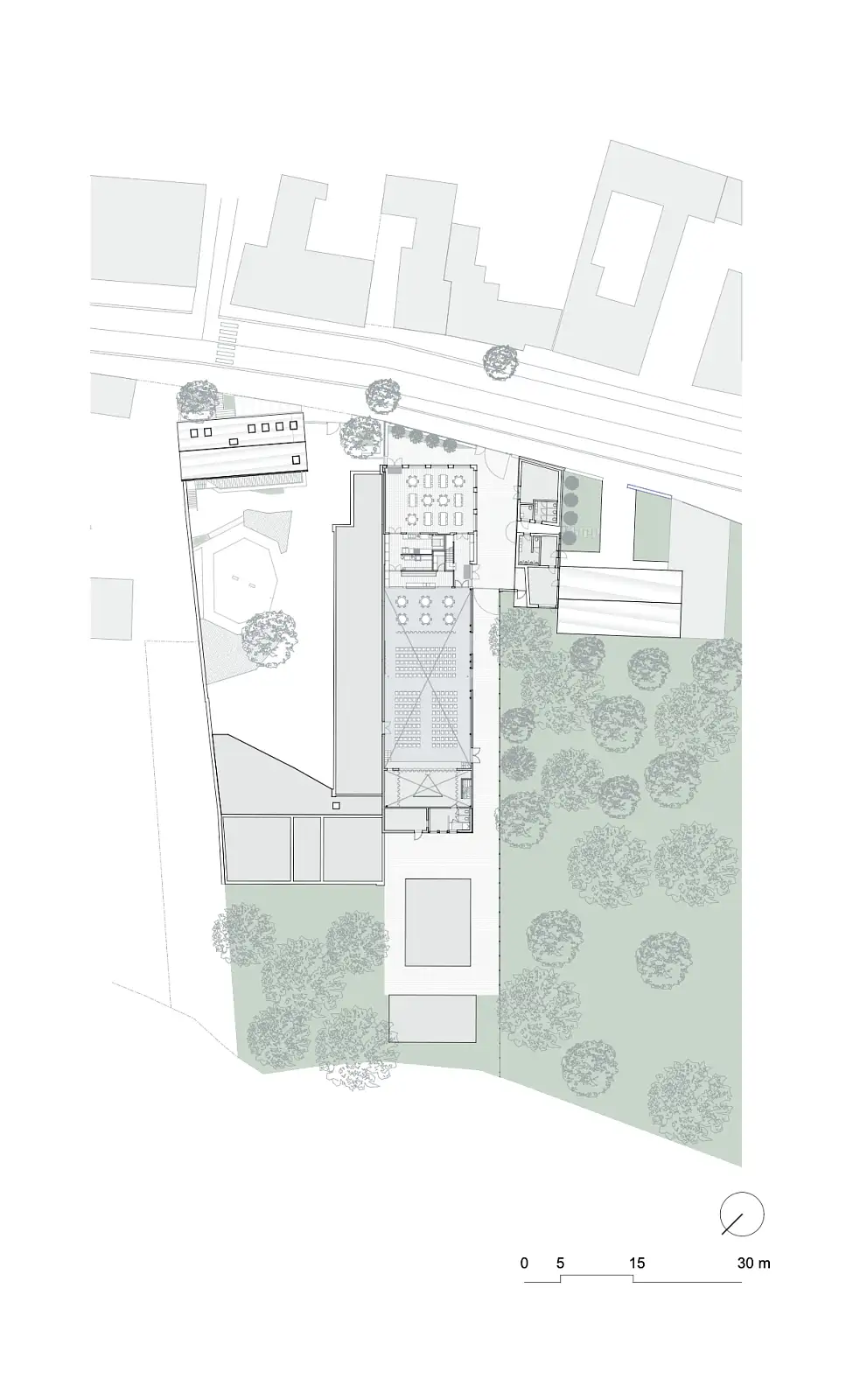
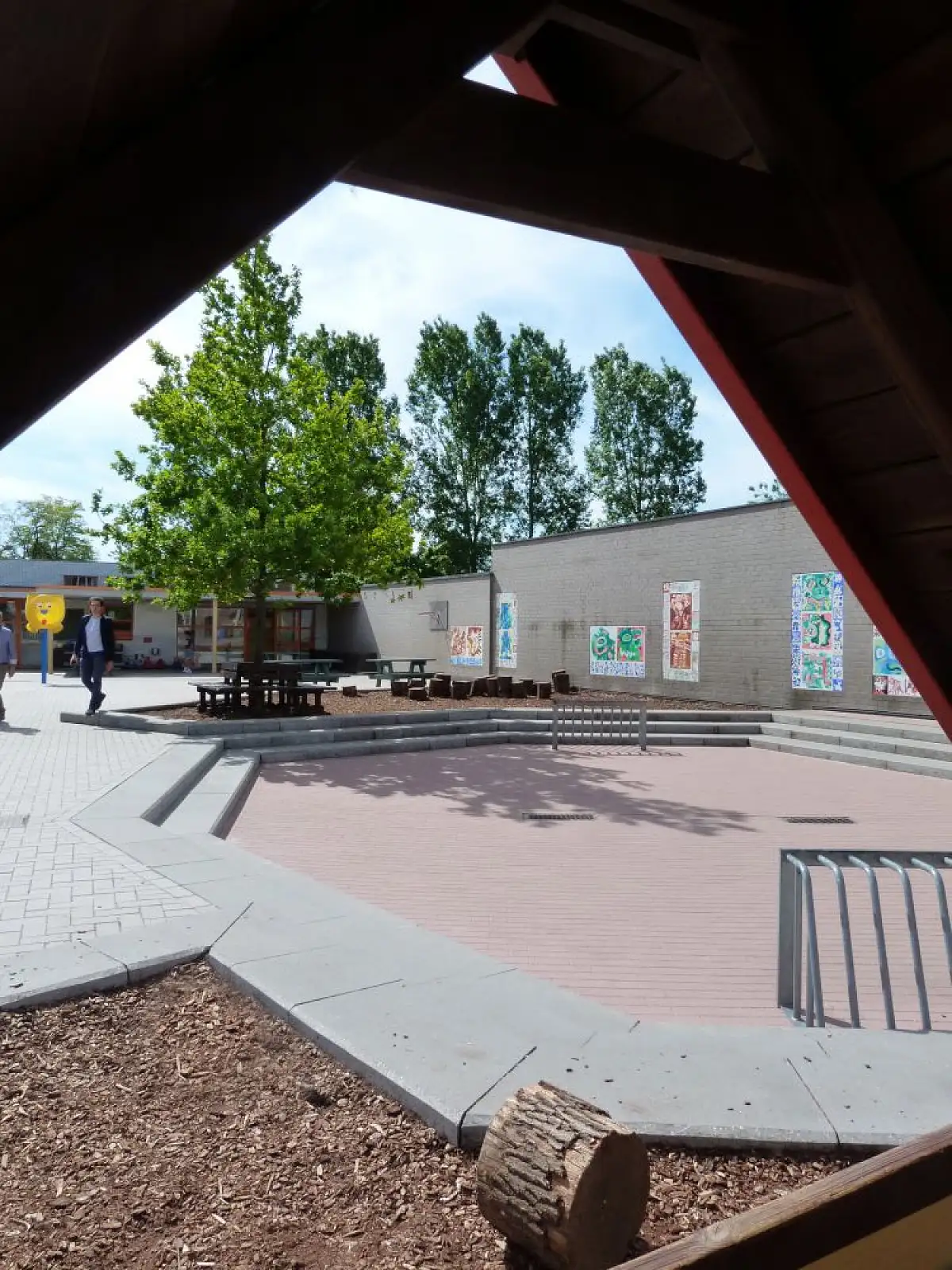
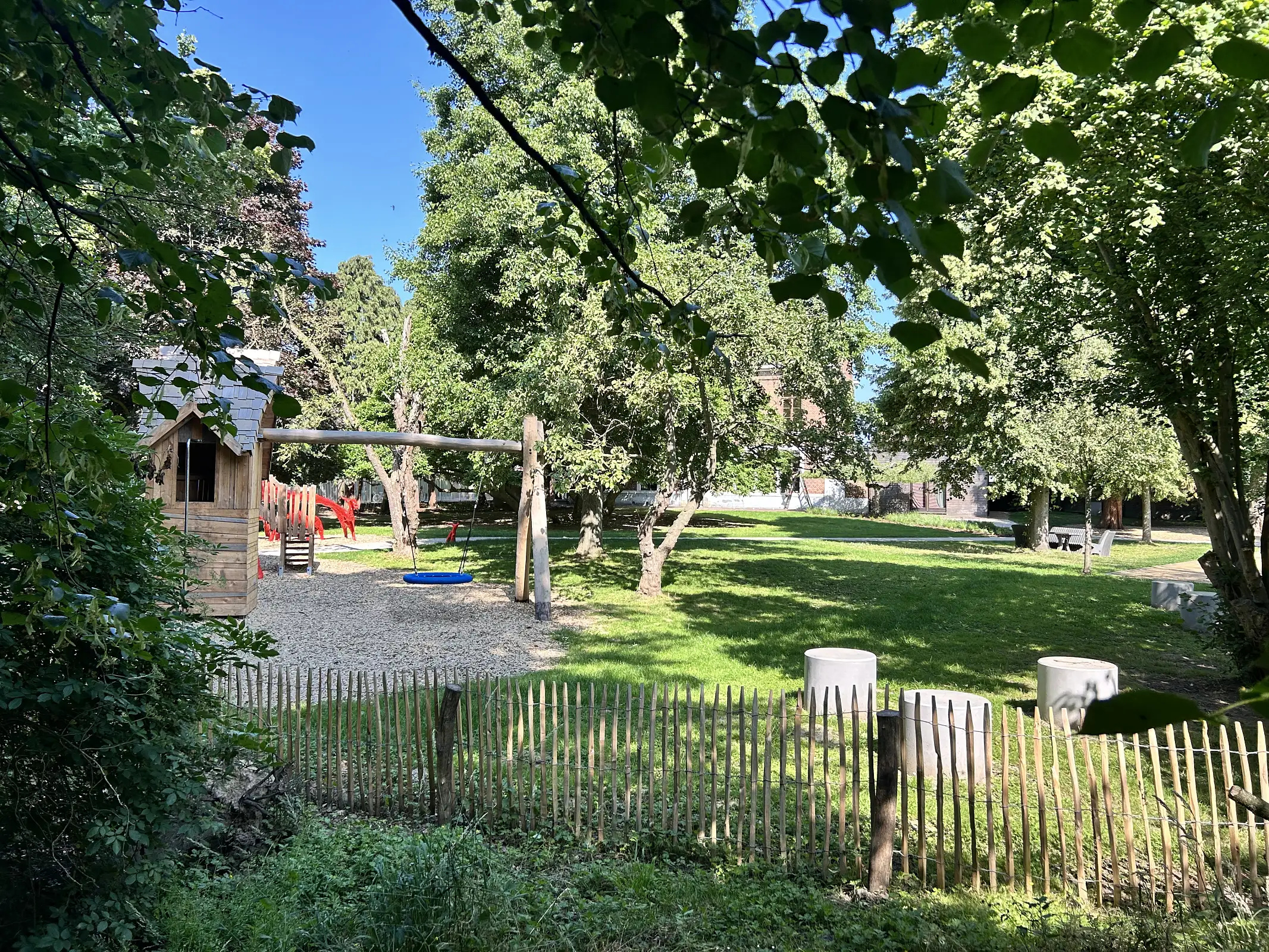
The project unfolded across three phases and more than ten years. The conversion of the convent building into a school, the redesign of the playground, and finally the transformation of the community hall — each time the same question was asked: how can spaces serve multiple lives, how can functions reach beyond their own boundaries? Thinking across property lines was not a technical requirement but a design philosophy. Part of the school playground opens up to the public domain in the evenings. The former rectory garden — reimagined as a lush public green space — belongs as much to the school as to the village.
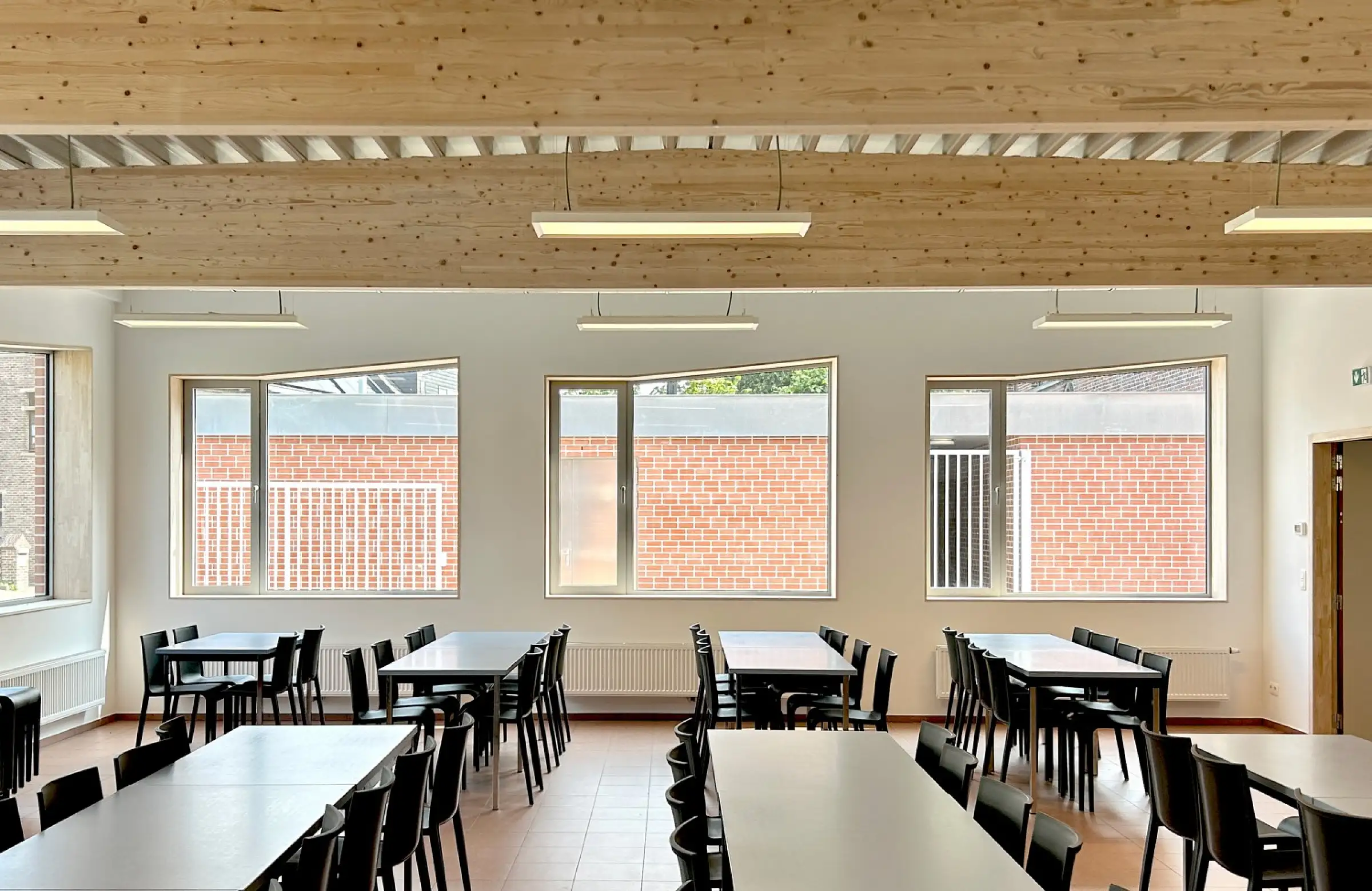
The multifunctional hall is the hinge in a green-blue network of shared uses: a theatre group, a music academy, a primary school and local residents share not just an entrance but a common landscape. The garden connects formal and informal programmes like a green lung. Water, planting and soft transitional spaces weave an ecological network across the site — a quiet investment in resilience and biodiversity, felt in every season.
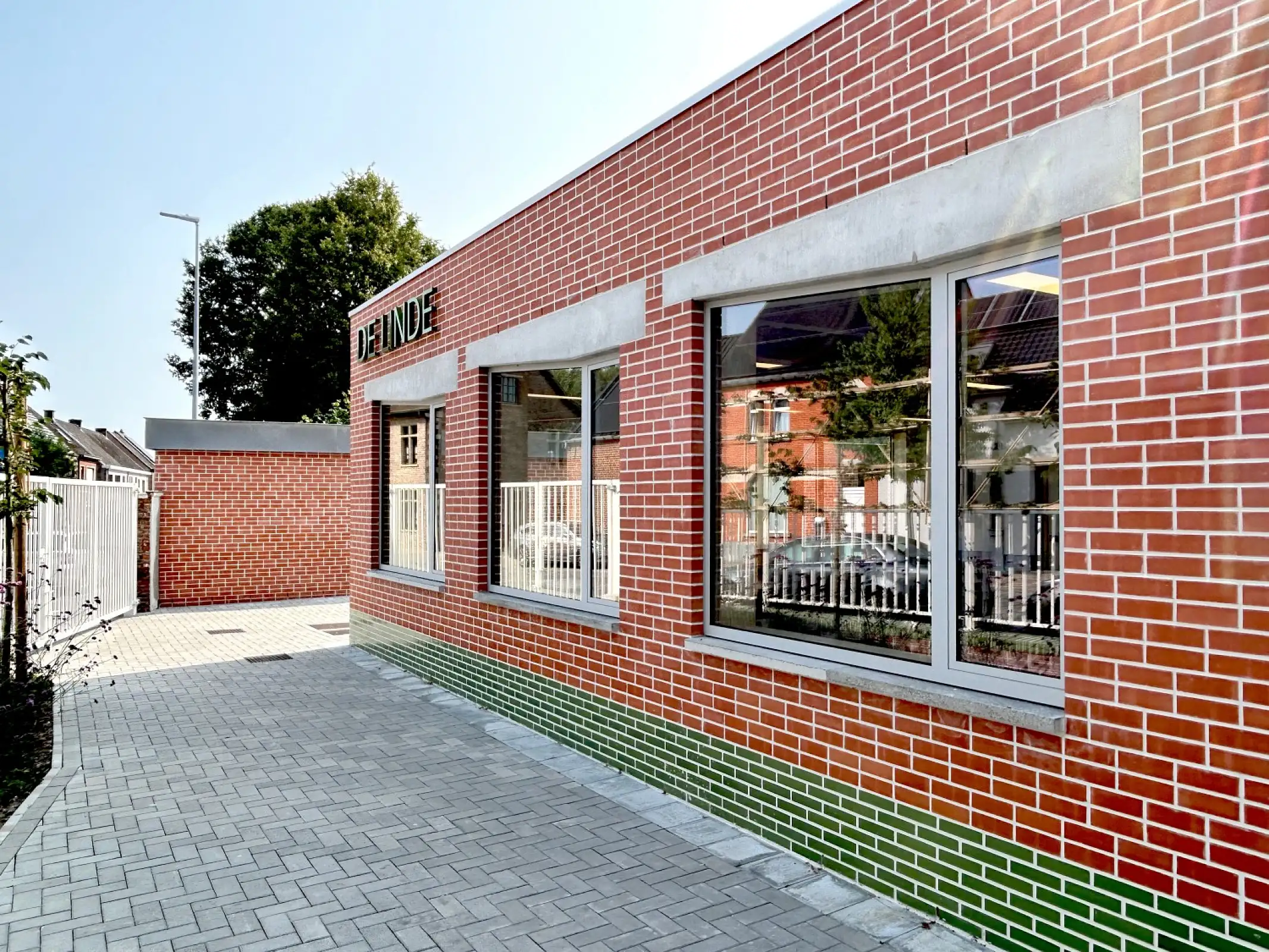
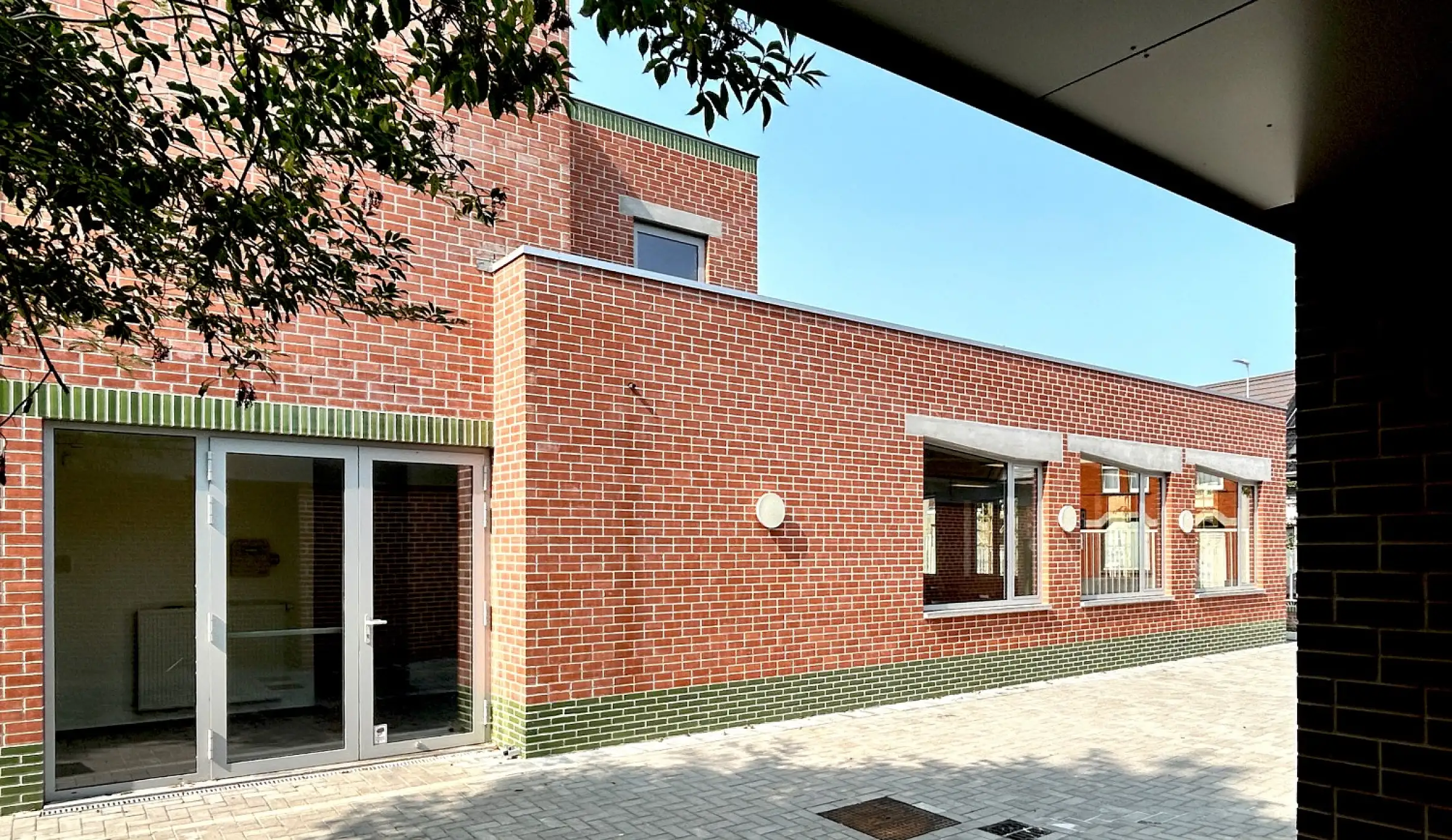
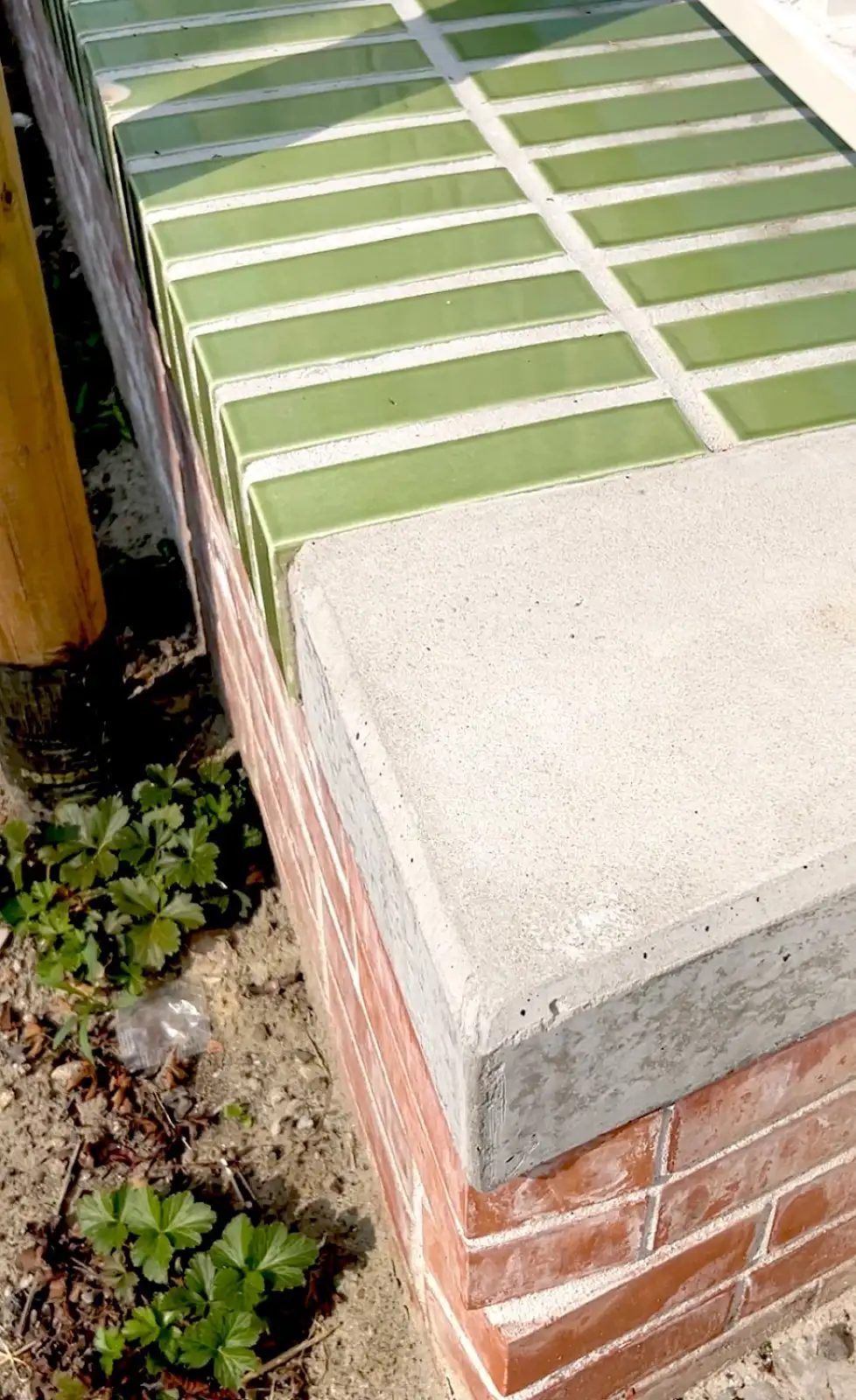
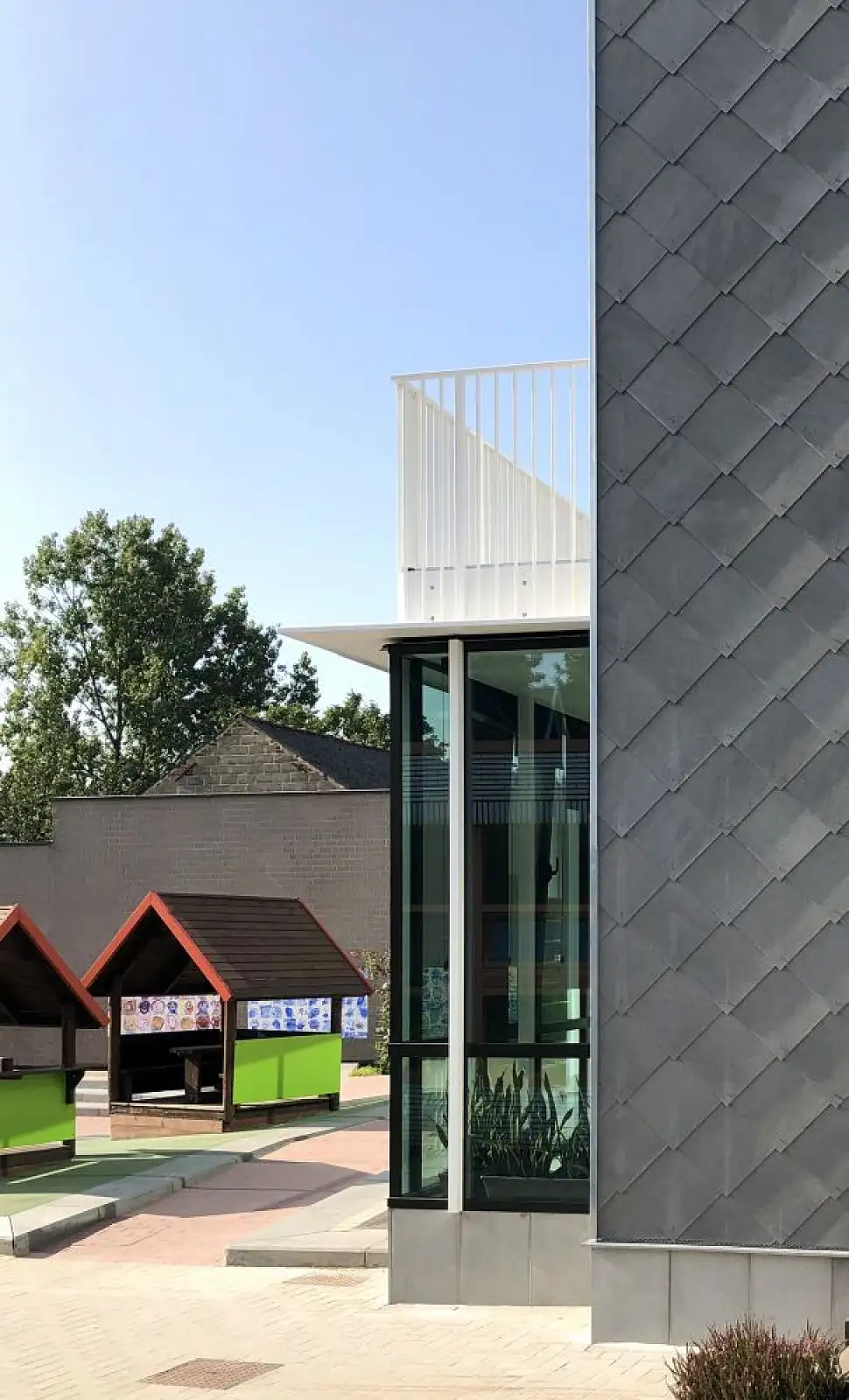
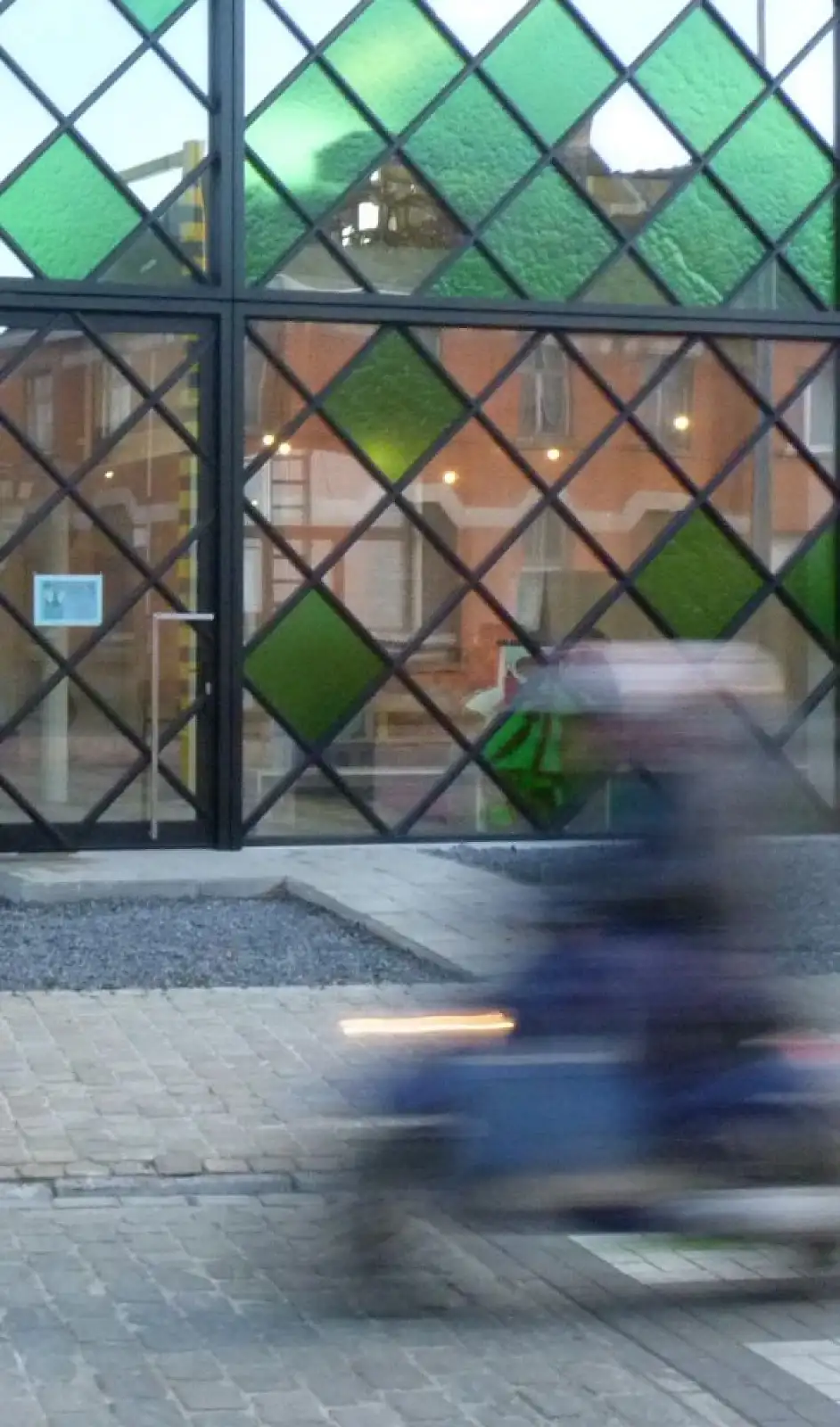
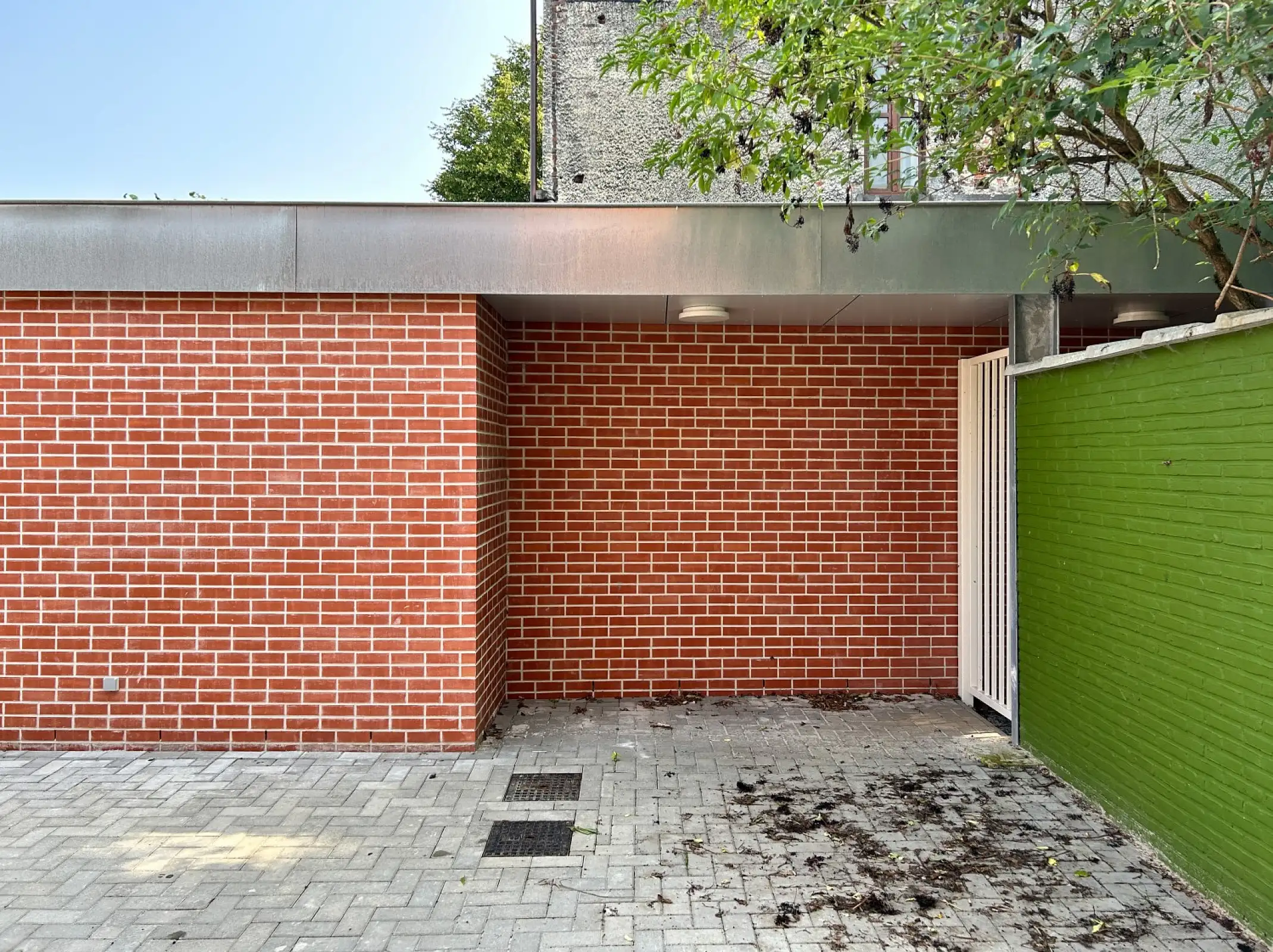
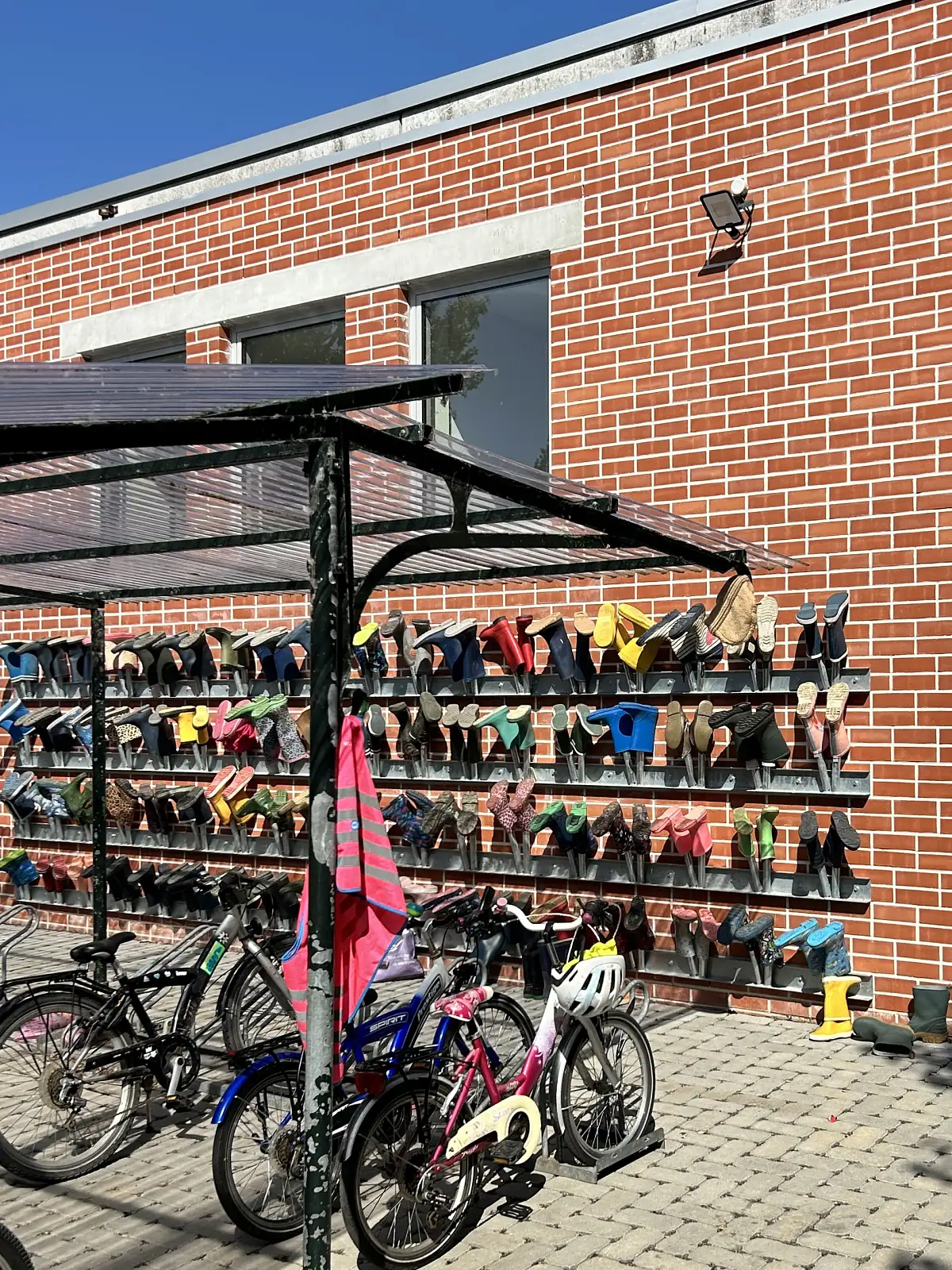
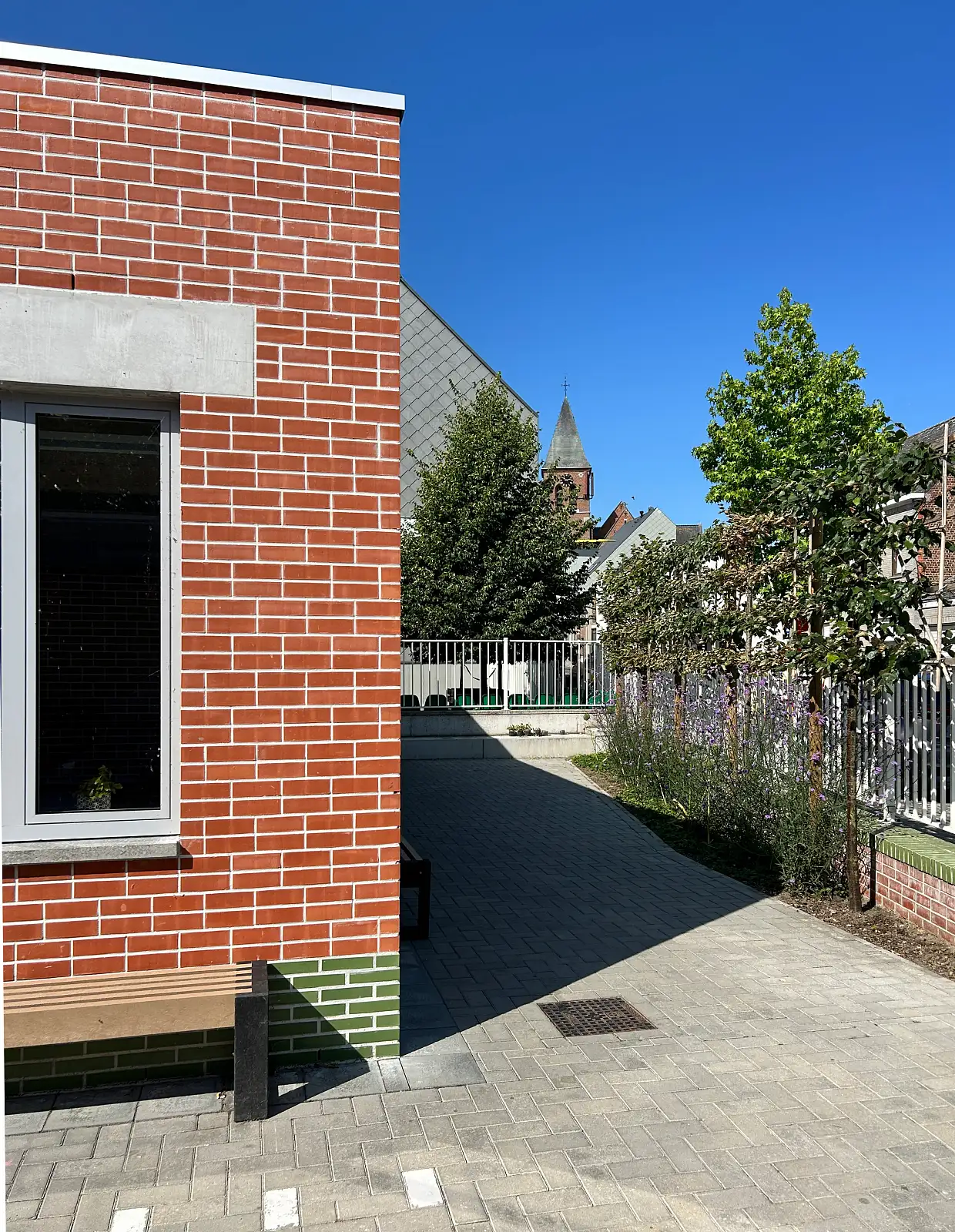
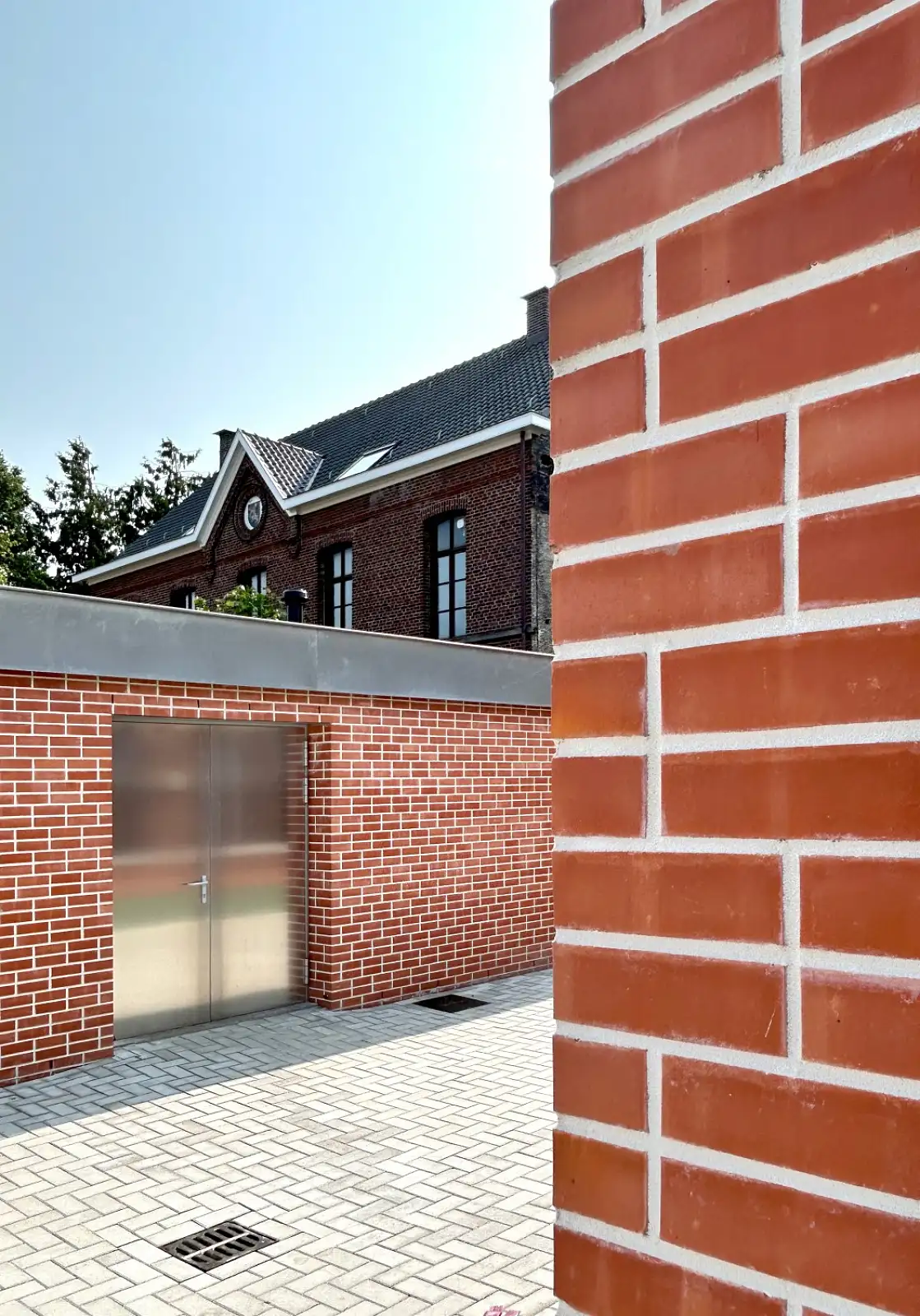
Circularity guided every decision. Existing structures were not demolished but reinterpreted. Renovation over demolition, reuse over replacement — a stance that is both pragmatic and principled. Where new volumes were necessary, they speak the language of what already stood: glazed and wire-cut brick, a carefully considered bond pattern, chamfered concrete lintels that catch the light and give the facades depth and texture. Materiality as continuity.
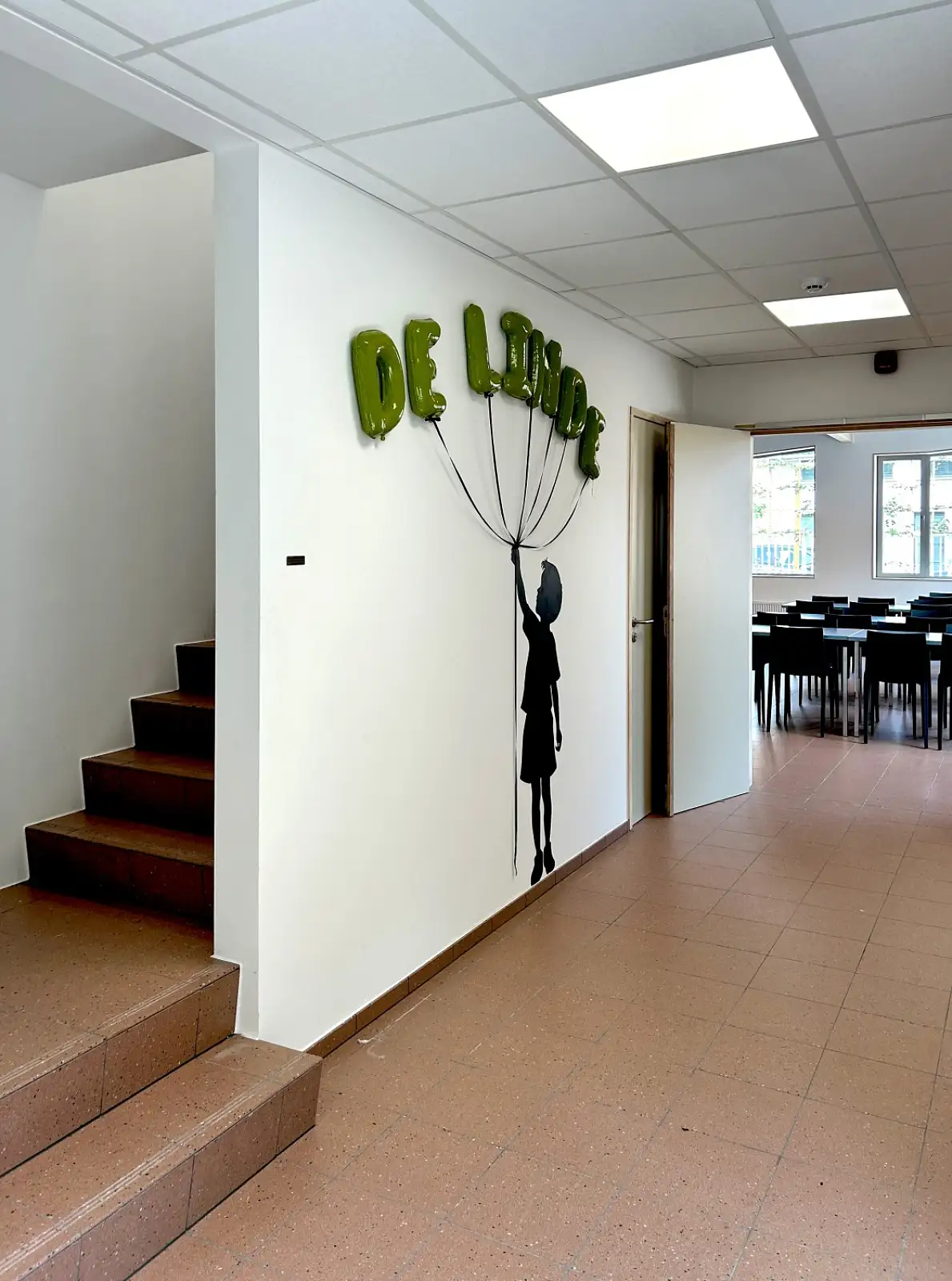
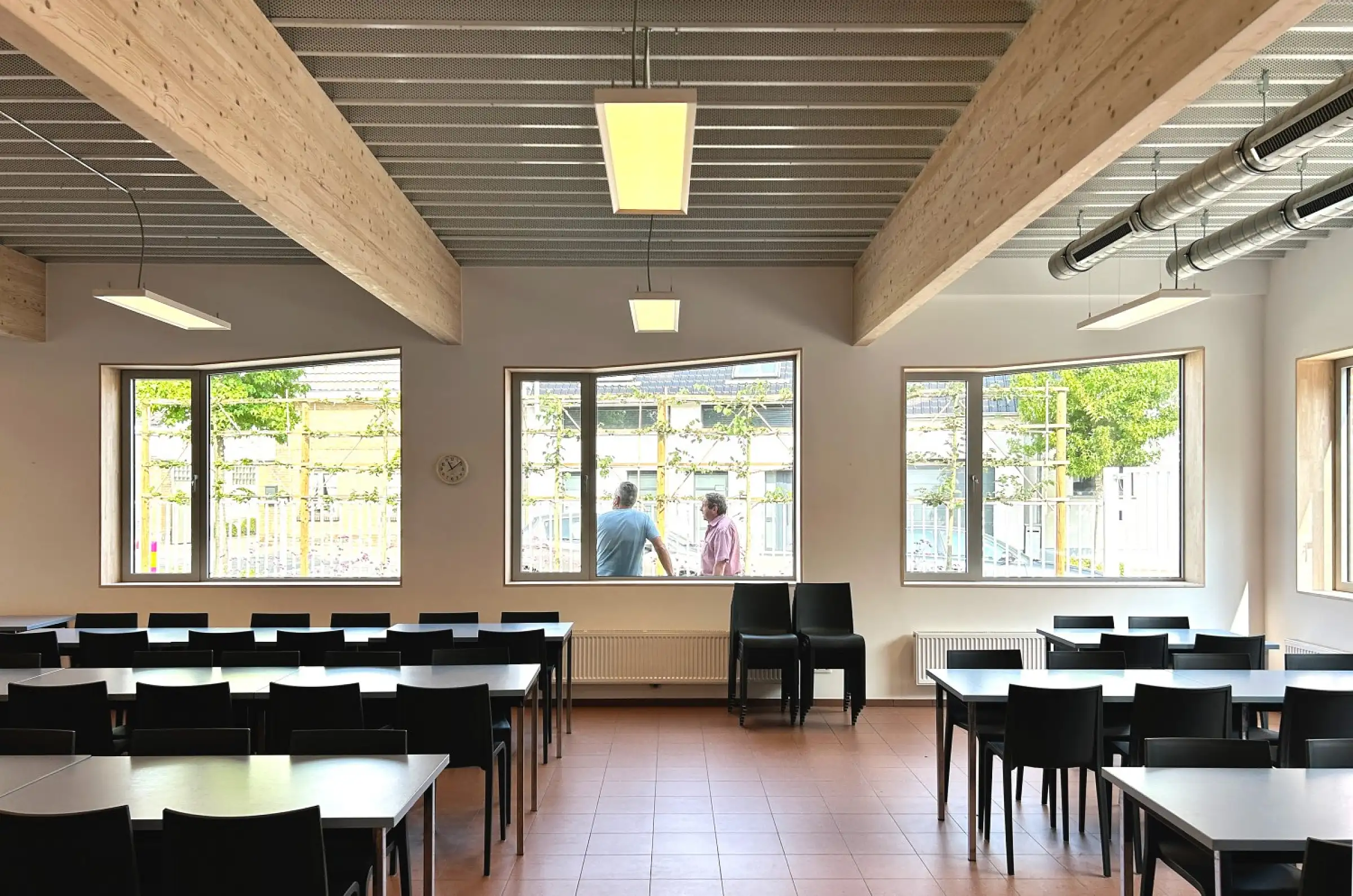
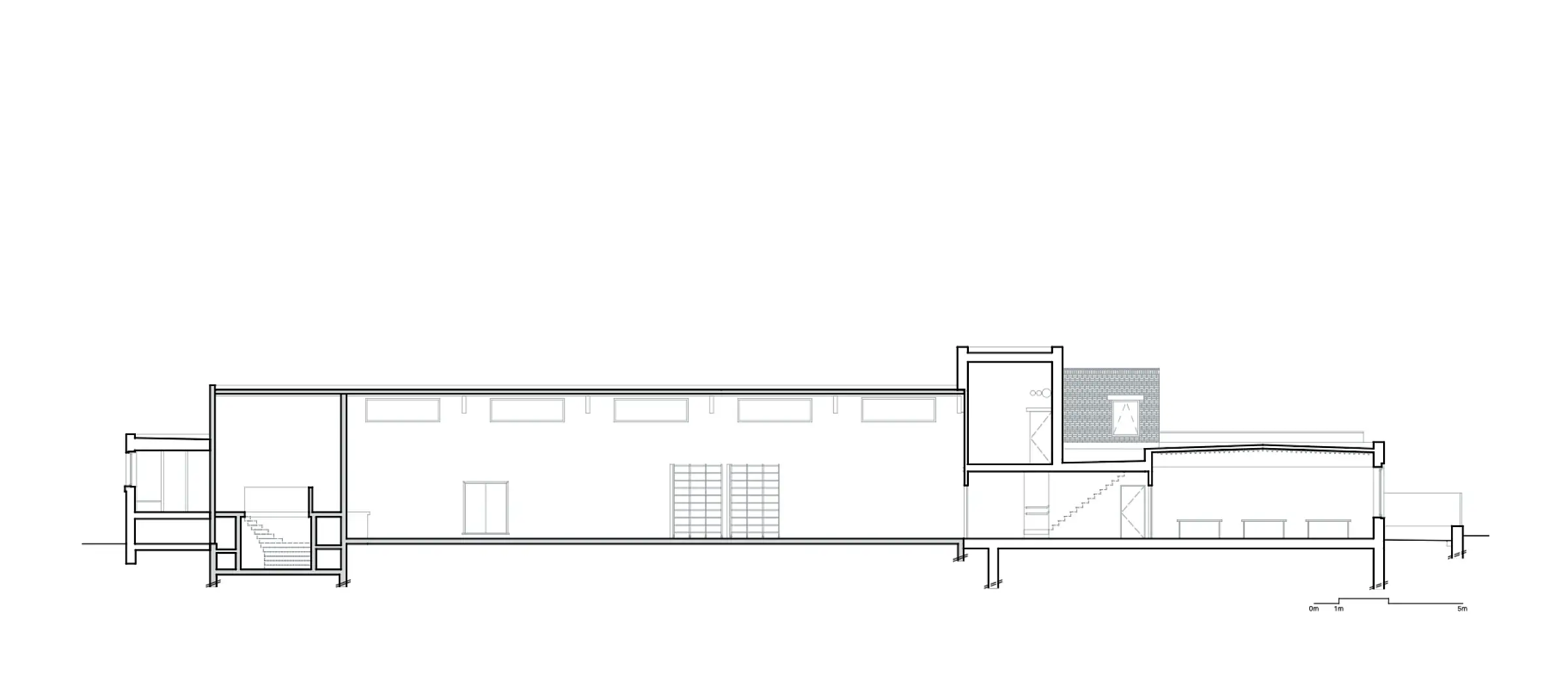
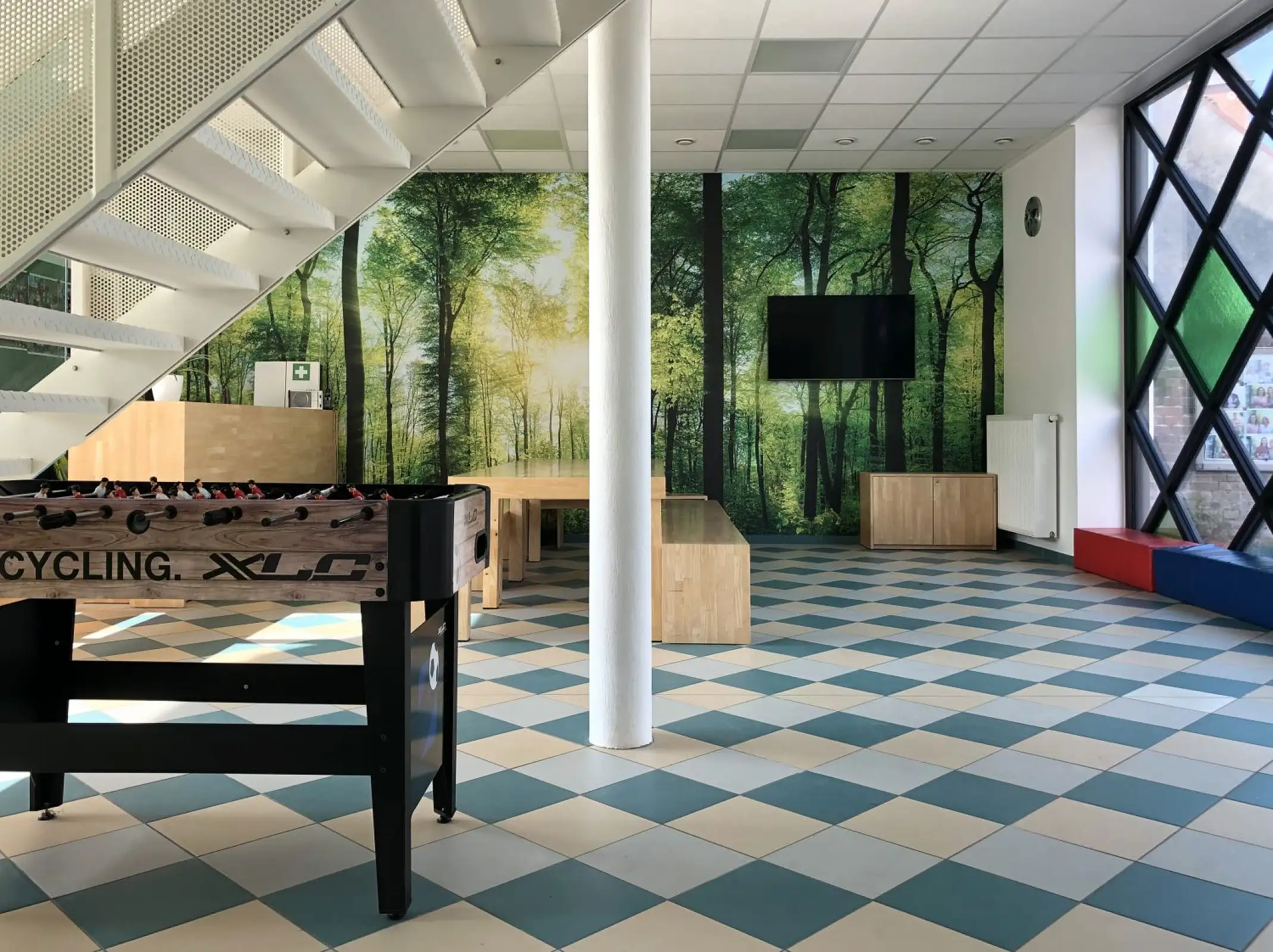
The most underestimated design element may well be the entrance. The tower — tall between the main event space and the lower foyer wing — marks the threshold and draws you in. It is not a symbol but a practical pivot: all technical systems are concentrated within it, leaving the halls free and adaptable. Multi-use here is not a line in the brief but a spatial reality: the smaller room serves as foyer, classroom, reception space, meeting room — one volume, countless identities.
Social cohesion cannot be programmed, but it can be made possible. De Linde proves it. Through an online booking system, the hall is in use every single day. Volunteers run the building with genuine pride. Through Aan Tafel — literally 'At the Table' — the management committee invites solitary villagers to share a meal together. Architecture as a catalyst for encounter: that is precisely what this building was designed for, and precisely what it does.